
INSIGNIA 75" Class F50 Series LED 4K UHD Smart Fire TV
4.2Editor score
4K UHD with HDR10
Alexa voice remote
Three HDMI inputs
A 75 Inch 4K TV can turn a living room into an immersive home theater, but the enormous screen makes every weakness easier to notice. The right model should combine sharp 4K detail, convincing contrast, accurate color, smooth motion, intuitive streaming, and speakers that can carry a large room without sounding thin or hollow.
We compared ten 75-inch sets based on their panel and backlight technology, high dynamic range support, refresh rate, gaming features, smart platform, audio, upscaling capability, and practical connectivity. The list covers conventional LED and QLED models, Mini LED sets designed for stronger contrast, and premium options focused on gaming, sports, and cinematic presentation.
Each recommendation highlights the characteristics that distinguish one model from another, including picture processing, motion handling, free content, voice control, and surround-sound support. Ratings and availability can change over time, and retail pricing also fluctuates, so confirm the latest listing, specifications, and feature availability before making a purchase.
4.2Editor score

4.4Editor score

4.3Editor score
As an Amazon Associate we earn from qualifying purchases.
The table below compares the ten models by backlight or color technology, motion performance, major HDR and audio standards, and smart-TV ecosystem, giving shoppers a concise view of where each set stands out.
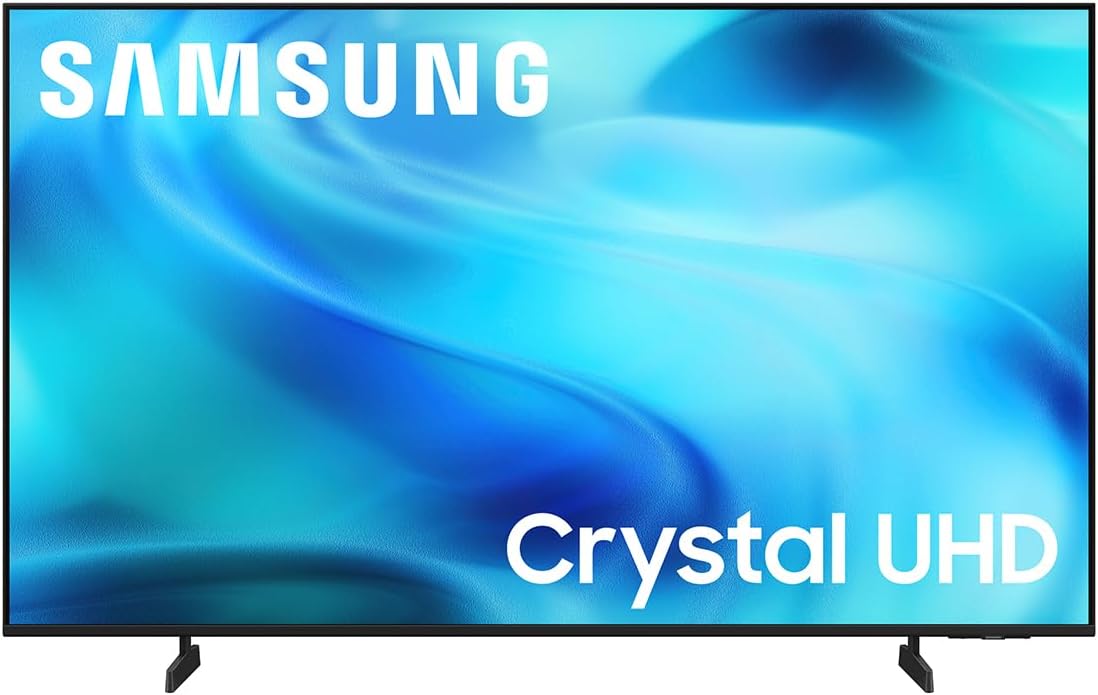


The Samsung U8000H is a 75-inch 4K Smart TV built around a Crystal Processor that sharpens detail, enhances color, and upscales lower-resolution content. It carries a 4.2 rating, placing it among the stronger all-around choices in this guide. Its appeal comes from a familiar Samsung platform, a large 4K screen, and features that cover movies, sports, streaming, and everyday viewing.
We may earn a commission when you buy through this link, at no additional cost to you.
Its picture engine is designed to make a variety of sources look cleaner and more vivid. The Crystal Processor supports 4K upscaling, while Color Booster is intended to add intensity to reds, blues, and other shades. Motion Xcelerator estimates frame transitions in real time and is specified for smooth playback with up to 4K 60Hz performance, making the set more relevant for sports and action than a basic fixed-rate television.
The trade-off is that this model does not claim the native 144Hz refresh rate, sophisticated zone-based Mini LED dimming, or advanced gaming features found on several premium competitors. It also does not list Dolby Vision, Dolby Atmos, VRR, or ALLM among its stated benefits. For viewers who prioritize simple operation, polished upscaling, and abundant free programming rather than the most demanding gaming specification, those omissions are reasonable.
Choose the U8000H if you want a large Samsung television with strong processing, free streaming choices, and useful motion enhancement without moving into the most advanced premium category. It is especially well suited to mixed-content households that want movies, live sports, gaming, and channel surfing in one screen. Among the sets here, it offers a particularly approachable balance of picture processing and platform convenience.
The Crystal Processor is especially valuable when streaming, broadcasting, or watching older content at less than 4K resolution. Its upscaling and detail sharpening are intended to create cleaner images, giving viewers a more polished result on a screen large enough to expose low-quality source material.
Samsung TV Plus provides access to more than 2,700 free streaming options, including more than 750 subscription-free channels. That makes the television more useful immediately for viewers who want news, sports, films, family programming, and rotating entertainment without committing to a subscription.
We may earn a commission when you buy through this link, at no additional cost to you.
The INSIGNIA F50 is a budget-focused 75-inch 4K UHD Smart Fire TV with a 4.2 rating. Its core appeal is straightforward: a very large 4K panel, HDR10 support, direct LED backlighting, Fire TV, and an Alexa Voice Remote. It provides the essentials for streaming, broadcasting, gaming, and home entertainment without the feature complexity of the higher-end sets.
We may earn a commission when you buy through this link, at no additional cost to you.
Direct LED backlighting is designed to produce a uniformly bright image with improved color accuracy and contrast compared with a backlight-less arrangement. HDR10 expands the perceived range between bright whites and dark blacks, while 4K upscaling can improve the appearance of existing HD content. These features make the F50 a practical option for viewers who want more visual polish than a basic HD television.
Its limitations are equally relevant. The listed specifications do not include Mini LED local dimming, a high native refresh rate, VRR, ALLM, Dolby Vision, or Dolby Atmos. DTS Virtual-X can create a more dimensional sound presentation from the television speakers, but a soundbar or surround system would still be advisable for a room this large. The three HDMI inputs are practical, though they will not support the newest high-end gaming specifications.
The F50 is best for value-conscious buyers who want a huge 4K screen, familiar Fire TV navigation, voice control, and basic HDR performance. It is also a sound option for a secondary family-room television, bedroom suite, or dedicated streaming display. If you can accept a conventional LED picture and standard gaming capabilities, it delivers the most approachable entry point in this list.
A 4K panel alone does not guarantee excellent picture quality, but it provides the necessary resolution for large screens and high-detail 4K sources. The F50 adds upscaling and HDR10, giving shoppers useful tools for both modern streaming and legacy content.
Three HDMI ports, optical output, USB, composite connections, Ethernet, Wi-Fi, and a headphone jack cover most common entertainment arrangements. HDMI ARC and eARC support simplifies the process of sending television audio to a compatible soundbar or receiver.
We may earn a commission when you buy through this link, at no additional cost to you.
The Samsung M70H combines a 75-inch 4K panel with Mini LED backlighting, advanced picture processing, and a 4.3 rating. Mini LED technology enables finer contrast control than a conventional LED arrangement, while the processor is designed to deliver brighter highlights, deeper blacks, and clear detail. It is a particularly compelling choice for movies and sports.
We may earn a commission when you buy through this link, at no additional cost to you.
Its Pure Color Spectrum is specified to deliver one billion colors, with emphasis on rich reds, deep blues, and vibrant greens. Supreme Mini LED Dimming works with the Mini LED HDR system to create a wider contrast range. For fast scenes, Motion Xcelerator and a listed 120Hz performance target help maintain clarity, which is especially relevant for football, soccer, and other rapid movement.
The main compromises are that it does not claim native 144Hz performance, and Dolby Vision is not listed. Its specified gaming experience is centered on the Gaming Hub, which gathers games from consoles, cloud services, and gaming applications and provides recommendations. That convenience broadens its appeal, although the set does not list the same advanced gaming standards as some Mini LED competitors.
Buy the M70H when you value Samsung’s interface and free-content ecosystem but want a clear upgrade in contrast, brightness, and motion over a conventional LED television. It is especially attractive for a large living room where sports and movies will be watched regularly. Buyers focused strictly on the highest listed gaming refresh rate should examine the native 144Hz models instead.
Mini LED backlighting gives the M70H finer control over bright and dark areas than a standard direct-lit LED screen. The result is intended to preserve visible shadow detail while allowing highlights to become brighter, making the picture more dimensional in dark cinematic scenes.
Soccer Mode is designed to make fast action easier to follow, with the listed package claiming clearer motion and more vibrant greens. Together with the 120Hz target and Mini LED brightness, it is a strong match for viewers who watch significant live sports.
We may earn a commission when you buy through this link, at no additional cost to you.
The Hisense E7 Cinema Series is the strongest all-around recommendation in this guide, earning a 4.4 rating. It brings together Hi-QLED Mini LED backlighting, a native 144Hz refresh rate, Dolby Vision IQ, Dolby Atmos, AI picture processing, and Fire TV. That combination covers the most important demands of a 75-inch television: rich contrast, fluid motion, accurate HDR, strong sound, and convenient streaming.
We may earn a commission when you buy through this link, at no additional cost to you.
Thousands of precise Mini LED lighting zones are intended to reveal deeper shadows and brighter highlights without sacrificing overall clarity. Its Total HDR Solution supports Dolby Vision IQ, HDR10+ Adaptive, HDR10, and HLG, allowing it to adapt to different formats and room conditions. AI Picture examines content scene by scene, while the AI Light Sensor adjusts backlight output according to ambient light. For cinematic content, Filmmaker Mode preserves the original aspect ratio, color, frame rate, and sound.
Motion is another major strength. Native 144Hz performance is designed to keep rapid gameplay, live sports, and action sequences fluid, while AI Smooth Motion with MEMC reduces blur and sharpens moving images. Dolby Atmos adds room-filling sound, although many buyers of a set this large may still choose a dedicated audio system. The included feature set is extensive, so some users may also prefer to leave several AI and picture controls at their defaults.
This is the model to choose when one television must handle cinematic movies, live sports, modern consoles, streaming, and everyday viewing. It offers the highest rating among the listed products and a broad feature set without moving beyond the core strengths of a 4K 75-inch display. It is an especially compelling recommendation for buyers who want Mini LED contrast and 144Hz motion together.
Dolby Vision IQ and HDR10+ Adaptive allow the E7 to respond intelligently to the content and viewing environment. Combined with Mini LED backlighting and AI Picture, these tools are designed to reveal highlight detail, deepen shadows, and maintain natural-looking color across different sources.
The native 144Hz rate is a major advantage over 60Hz-oriented sets and many 120Hz alternatives. AI Smooth Motion with MEMC provides an additional layer of clarity for fast transitions, although motion enhancement settings should be adjusted to suit individual viewing preferences.
We may earn a commission when you buy through this link, at no additional cost to you.
The TOSHIBA M450 Series is a 75-inch QLED 4K Smart Fire TV with a 4.3 rating. Its key strengths are the REGZA AI Engine ZRi Gen3, QLED color, Dolby Vision, Dolby Atmos, and a gaming mode that supports ALLM, VRR, and eARC. It presents a refined, design-focused alternative for viewers who want strong processing and sound but do not need a Mini LED panel.
We may earn a commission when you buy through this link, at no additional cost to you.
The REGZA engine is tuned to reproduce images and sound in a natural way, and its AI 4K Clarity feature is designed to bring lower-resolution material closer to 4K while reducing noise. REGZA QLED technology supports rich, lifelike color, while HDR10+ Adaptive adjusts brightness and contrast scene by scene. These features make the set well suited to movies, streaming, sports, and mixed-quality broadcast sources.
REGZA Power Audio routes sound through dual clear direct speakers to improve clarity and spatial realism. A soundbar remains a logical addition for a large room, but Dolby Atmos support gives the built-in system more potential than a basic television configuration. On the gaming side, ALLM, VRR, and eARC provide useful functions, although the specifications do not list a high native refresh rate comparable with the 144Hz models.
The M450 is worth considering for shoppers who value television craftsmanship, QLED color, integrated audio, and a minimalist design inspired by Japanese aesthetics. It is best for mixed users who want Dolby Vision, useful gaming features, and refined processing without selecting a Mini LED model. Its 4.3 rating also reflects a strong balance of picture, features, and platform convenience.
The REGZA AI Engine ZRi Gen3 is tuned by picture experts to emphasize detail, clarity, and natural presentation. Its 4K Clarity function focuses on both upscaling and noise reduction, which can help older or compressed content look cleaner on a very large panel.
Game Mode supports ALLM, VRR, and eARC, giving the set useful tools for compatible consoles. However, shoppers whose priority is the highest possible refresh rate should favor one of the Mini LED alternatives explicitly specified at native 144Hz.
We may earn a commission when you buy through this link, at no additional cost to you.
The Hisense U6 Pro Series is a premium 75-inch Mini LED QLED television with a 4.3 rating. It stands out with native 144Hz performance, Hi-QLED color, an anti-reflective and glare-free display, a built-in subwoofer, IMAX Enhanced certification, and support for an extensive range of HDR formats. It is built for buyers who want a versatile premium set for movies, sports, gaming, and bright-room viewing.
We may earn a commission when you buy through this link, at no additional cost to you.
Hundreds of precise Mini LED lighting zones are combined with Hi-QLED technology to improve contrast and color accuracy. The anti-reflective surface is especially notable because ambient reflections can be distracting on a screen of this size. Its Hi-View AI Engine automatically adapts picture settings to different content, while Pantone validation adds a measurable basis for the set’s color claims.
The U6 Pro offers broad format support, including Dolby Vision IQ, HDR10+ Adaptive, HDR10, and HLG. Its native 144Hz rate is designed to keep high-speed sports and gameplay crisp, and the listed Motion Rate 480 adds another indicator of its motion focus. The built-in subwoofer provides deeper bass than most television speakers, although it does not replace a full home theater sound system.
This is a premium recommendation for households that regularly watch sports, use current-generation gaming hardware, or keep the television in a room with substantial ambient light. The wide feature set may feel excessive to casual viewers, and the edge-to-edge unibody design demands careful measurement. Still, the combination of glare resistance, Mini LED contrast, 144Hz motion, and strong audio makes it one of the most complete premium choices here.
The anti-reflection and glare-free treatment directly addresses one of the biggest challenges of owning a very large television. By reducing distracting reflected light, the screen can preserve perceived contrast and color when daylight or lamps are present in the viewing area.
A dedicated built-in subwoofer adds low-frequency impact that can make action sequences and music feel more complete. Combined with IMAX Enhanced certification and DTS-powered audio, it offers a stronger built-in sound foundation than most conventional large-screen sets.
We may earn a commission when you buy through this link, at no additional cost to you.
The Samsung Q7F is a 75-inch QLED 4K television built around Samsung Vision AI, a Q4 AI Gen1 processor, Quantum HDR, and Object Tracking Sound Lite. It has a 4.3 rating and focuses on intelligent picture processing, convenient streaming, and a feature-rich Samsung smart-TV environment. It is a strong choice for general entertainment and mixed content use.
We may earn a commission when you buy through this link, at no additional cost to you.
The processor provides 4K upscaling and AI-optimized color and audio based on the type of content. Samsung’s Quantum Dots are specified to display more than a billion shades while maintaining precision in bright scenes. Dynamic tone mapping through HDR10+ is intended to strengthen contrast and make meaningful detail visible, though this is not a Mini LED set and therefore does not offer the same class of zone-based highlight control.
The Gaming Hub gathers titles from supported consoles, cloud services, and gaming applications, with recommendations designed to simplify discovery. Samsung TV Plus supplies more than 2,700 free channels, including more than 400 premium channels, which adds considerable value for viewers who do not want to maintain several paid subscriptions. Triple-layer Knox security also protects against harmful applications and phishing while safeguarding connected-device information.
The Q7F is recommended for households that want a polished Samsung television with good upscaling, intelligent audio and color processing, and convenient access to free programming. It falls short of the best gaming choices because no high native refresh rate is listed, and its QLED panel does not include Mini LED backlighting. It remains a versatile pick for everyday viewing and mixed streaming.
Samsung Vision AI adjusts color and audio according to the material being watched, while 4K upscaling helps improve lower-resolution sources. This processing is useful on a large display because it can make mixed streaming and broadcast content feel more consistent.
Samsung TV Plus includes thousands of channels and on-demand options without a subscription. For a household that watches a lot of free entertainment, the breadth of news, sports, movies, and lifestyle programming can be nearly as important as the television’s picture hardware.
We may earn a commission when you buy through this link, at no additional cost to you.
The Hisense E6SR has the highest customer rating in this selection at 4.5, making it an especially popular recommendation. It combines a 75-inch Hi-QLED 4K panel with a Roku smart platform, Dolby Vision, AI picture processing, AI 4K upscaling, and DTS Virtual:X audio. The interface is straightforward, and the set supports both Alexa and Google Assistant alongside Apple AirPlay.
We may earn a commission when you buy through this link, at no additional cost to you.
Hi-QLED technology is designed to produce vivid yet authentic color, including natural skin tones, while AI Picture and the AI 4K Upscaler sharpen detail and improve older or lower-resolution content. Dolby Vision offers high dynamic range presentation with the goal of greater brightness and deeper contrast. DTS Virtual:X is intended to clarify dialogue and create a surround-like sound effect from the built-in speakers.
Game Mode Plus, VRR, and ALLM make this a capable television for compatible consoles. However, the product data does not list a high native refresh rate, Mini LED local dimming, or Dolby Atmos. The E6SR consequently focuses on accessibility and ease of use rather than advanced panel specifications. It is also the most straightforward choice for households that prefer Roku’s simple interface and do not want to navigate Samsung, Fire TV, LG, or Google TV ecosystems.
The E6SR is a strong recommendation for viewers who prioritize easy streaming, broad voice-assistant compatibility, accurate color, and practical gaming features. Its high rating makes it worth considering for a family room, while Dolby Vision and Hi-QLED provide more visual ambition than a basic LED set. It is less suited to enthusiasts who demand a native high refresh rate or fine local dimming.
The Roku platform is known for a streamlined interface with centralized app access and straightforward navigation. Buyers who want a large television primarily for streaming can benefit from avoiding a more complex smart-TV menu system.
VRR and ALLM support responsive console play, while Game Mode Plus prepares the picture for gaming. Apple AirPlay and compatibility with Alexa and Google Assistant make it easier to integrate the television with a broader home-entertainment setup.
We may earn a commission when you buy through this link, at no additional cost to you.
The TCL QM6K is a 75-inch QD-Mini LED QLED television that combines quantum-dot color with Mini LED local dimming, a native 144Hz refresh rate, and Dolby Atmos audio. Its 4.3 rating reflects a capable premium package, while the Halo Control System is designed to improve blacks, shadow detail, and picture accuracy by reducing unwanted blooming around bright objects.
We may earn a commission when you buy through this link, at no additional cost to you.
The panel technology is intended to deliver high brightness, strong contrast, and more than a billion colors. Mini LED backlighting gives the set finer control over localized brightness than a standard LED panel, making it better suited to dark rooms and high-contrast movies. Dynamic support for Dolby Vision, HDR10+, HDR10, and HLG ensures that major HDR formats can be used with the television’s advanced contrast capabilities.
The native 144Hz rate and listed Motion Rate 480 make the QM6K particularly attractive for fast sports, competitive games, and action films. Google TV provides access to streaming applications and voice-driven discovery, while the included Alexa-enabled remote supports voice searching. Dolby Atmos with Onkyo audio adds a more cinematic sound foundation than many conventional television speakers provide.
This is the right premium pick for buyers who want advanced Mini LED picture quality, broad HDR support, and high-refresh gaming in a single television. It may take some time to learn Google TV’s menus, and the supplied information does not state specific input latency measurements. Even so, the combination of Halo Control, 144Hz motion, and Quantum Dot color makes it one of the most compelling premium packages in the guide.
The Halo Control System is designed to keep bright subjects from creating distracting halos while still improving black levels and shadow detail. That balance is especially important for dark scenes in which subtitles, icons, and bright objects sit against deep blacks.
A native 144Hz refresh rate provides more temporal headroom than standard 60Hz or many 120Hz panels. Combined with the stated Motion Rate 480 processing and QD-Mini LED brightness, it is well positioned for fast console games, live sports, and action-heavy films.
We may earn a commission when you buy through this link, at no additional cost to you.
The LG QNED75B is a 75-inch Mini LED 4K Smart TV with a 3.7 rating. It offers Dynamic QNED color, an A7 AI Processor Gen9, HDR10 Pro, the webOS platform, Google Gemini, AMD FreeSync Premium, ALLM, and an LG Game Dashboard. The emphasis is on intelligent processing, broad smart-TV functions, and a clean entertainment hub.
We may earn a commission when you buy through this link, at no additional cost to you.
Its Mini LED backlighting and Dynamic QNED system are designed to improve brightness, color accuracy, and contrast. The processor handles picture detail and sound refinement, while HDR10 Pro dynamically adjusts brightness to reveal detail in both bright and dark scenes. Filmmaker Mode preserves the director’s intended colors, settings, and frame rates, while Ambient Light Technology supports a more integrated room aesthetic.
LG Channels provides more than 400 free channels alongside a large on-demand library, making the set useful without extensive subscriptions. Gaming features include AMD FreeSync Premium, ALLM, the Game Dashboard, and Game Optimizer, although the product data does not list a high native refresh rate. Its 3.7 rating is lower than that of every other model in the guide, so buyers should carefully consider customer feedback and current listing details.
The QNED75B is a reasonable choice for buyers who prioritize LG’s webOS interface, Mini LED hardware, AI processing, and integrated gaming controls. It may be especially attractive to users who also value Gallery Plus for displaying artwork when the television is idle. The choice is less compelling when a higher listed rating, native 144Hz performance, or more advanced gaming specifications are the main priorities.
The A7 AI Processor Gen9 is intended to enhance brightness, refine picture detail, and improve sound. This broad processing focus makes the television adaptable to news, sports, movies, and games without requiring extensive manual adjustment for every source.
AMD FreeSync Premium, ALLM, the Game Dashboard, and Game Optimizer give console and cloud gamers useful controls. LG Channels and Gallery Plus extend the entertainment value beyond conventional streaming, although the lack of a listed high refresh rate may matter to competitive players.
We may earn a commission when you buy through this link, at no additional cost to you.
Choosing among 75-inch televisions requires balancing panel technology, motion, HDR, audio, smart features, and room conditions. The best model is not automatically the one with the longest specification list; it is the one whose strengths match your content, games, viewing habits, and setup.
A 75-inch television needs enough distance to deliver an immersive image without overwhelming the room. Consider the seating distance, wall dimensions, furniture placement, and whether the set will sit on a console or be wall mounted. The image may be large enough that even minor dimming, reflections, or imperfect upscaling become easy to notice, so installation quality matters as much as the television itself.
Choose a 75-inch screen when your room can support it comfortably and you regularly view from a meaningful distance. Measure before ordering and check the manufacturer’s wall-mounting pattern if applicable.
Conventional LED backlighting is suitable for bright rooms and everyday viewing, while Mini LED uses many smaller lighting zones to improve contrast and highlight control. Local dimming can make dark scenes look richer and allow bright elements to stand out, although processing quality and halo control remain important to the final result. A 75-inch panel benefits noticeably from stronger control because its large surface area reveals unevenness.
Prioritize Mini LED when movies, dark-room viewing, and high-contrast HDR are central to your use. Choose a conventional LED set when simplicity, room brightness, and value matter more than deep blacks.
High dynamic range performance depends on both the format and the television’s brightness, dimming, and processing. Dolby Vision, Dolby Vision IQ, HDR10+, HDR10, and HLG are all represented in this guide, but support alone does not guarantee identical picture quality. Models with Mini LED backlighting and precise local dimming generally have more tools for creating bright highlights while retaining dark detail.
Check the complete HDR support list and prefer a set offering Dolby Vision for broad streaming compatibility. For the strongest results, compare brightness and dimming specifications rather than relying only on the HDR logo.
A native 144Hz television can display twice as many frames per second as a 60Hz model, which can make fast games and sports look smoother. Useful gaming standards include VRR for matching refresh rates to game output and ALLM for automatic low-latency operation. High refresh rates matter most to competitive players and viewers of quick sports, while casual gaming may place greater emphasis on picture processing and smart features.
Choose native 144Hz for demanding console or PC gaming. If your budget or room setup favors a 60Hz or 120Hz television, verify input-latency information and consider whether the extra smoothness is worth changing platforms.
The best smart platform is the one you understand and enjoy using. Samsung TV Plus and LG Channels provide extensive free content, while Fire TV, Roku, and Google TV organize paid streaming applications and offer different navigation styles. Voice control can make a large television easier to operate, particularly for viewers who struggle with small remote buttons or want to switch among many inputs.
Compare the apps you use, the prominence of free channels, remote design, voice-assistant compatibility, and account requirements. A familiar interface can matter more than having the longest list of smart features.
Television speakers must cover a wider physical area when paired with a 75-inch screen, and many buyers will add a soundbar or surround system. Dolby Atmos, DTS Virtual:X, Object Tracking Sound Lite, direct speakers, and a built-in subwoofer can improve the built-in presentation, but they do not guarantee the same immersion as a dedicated home theater setup. HDMI ARC and eARC are useful for connecting compatible audio equipment.
Treat built-in audio as a convenience and assess soundbar support before buying. If possible, plan for a soundbar or receiver, especially when movies, concerts, and sports are important parts of the experience.
Most streaming and broadcast sources do not arrive in native 4K, so upscaling quality has a major effect on the final image. AI processors can sharpen detail, reconstruct textures, reduce noise, and adjust color scene by scene. These tools help a large screen look cleaner, although aggressive processing can make ordinary content appear overly sharpened or otherwise unnatural.
Look for 4K upscaling and noise reduction, and use Filmmaker Mode or a similar calibrated mode when accuracy matters. Begin with professional picture modes and make limited adjustments from there.
A large-screen television should have enough HDMI inputs for a game console, streaming device, disc player, and sound system without constant switching. The INSIGNIA F50 lists three HDMI ports, while other sets also support eARC for audio. Gaming features such as Gaming Hub, Game Dashboard, Game Optimizer, VRR, and ALLM can make supported sources easier to configure and keep entertainment in one place.
Count your source devices and check the supported HDMI features for each model. Confirm that your console, receiver, streaming device, and voice assistant work together before finalizing a purchase.
Begin with the correct picture mode and allow the television to adjust to your room. For most homes, the manufacturer’s recommended home or theater preset offers a sensible balance, while Filmmaker Mode is useful for movies when accuracy takes priority. Ambient-light sensors and automatic AI modes can help, but it is still worth checking brightness and color after the television has operated for several minutes.
Connect source devices through the latest available HDMI inputs you plan to use, and enable ARC or eARC when connecting a compatible soundbar or receiver. Update the television’s software, sign into the chosen streaming accounts, and test voice commands before organizing a large watchlist. For gaming, enable VRR and ALLM only when the television and console support them, and confirm that motion enhancements produce a natural image rather than an exaggerated effect.
Care for the panel by cleaning it with a soft, lint-free cloth and avoiding liquid cleaners directly on the screen. Keep vents unobstructed, do not place objects against the back of the television, and use two people when moving a set of this size. Mount it only with compatible hardware, leave adequate ventilation, and adjust the brightness to a comfortable level rather than leaving a bright picture on continuously.
It depends on viewing distance, room dimensions, and personal preference. A 75-inch screen can feel appropriate in a dedicated media room or a generous living room, while it may overwhelm a smaller seating area. Measure the available wall or console space and imagine the screen at your normal viewing position before deciding.
Mini LED is generally better at controlling contrast because it uses many smaller backlighting zones. That allows brighter highlights and darker surrounding areas in many scenes. A standard LED set can still provide excellent 4K clarity and strong performance in a bright room, but Mini LED generally provides more latitude for cinematic HDR.
It can make fast pans, rapid player movement, and action sequences appear smoother than on lower-refresh televisions. The benefit is most visible on compatible high-frame-rate sources and with games capable of driving high frame rates. For many movies and standard broadcasts, a strong 60Hz or 120Hz model can still look excellent.
QLED refers to the use of quantum-dot color filtering, while Mini LED describes a more granular backlight system. The two technologies can appear together, as on the Hisense E6SR and TCL QM6K. Mini LED contributes better local contrast control, whereas QLED focuses on a broad, precise color gamut.
A soundbar is not required, but it is often worthwhile because television speakers may struggle to fill a large room with detailed dialogue and deep bass. Sets such as the Hisense U6 Pro include a built-in subwoofer and advanced audio processing, while others benefit from a soundbar or surround receiver connected through HDMI ARC or eARC.
Ease of use depends on personal preference, but Roku is widely recognized for straightforward navigation, while Fire TV and Google TV organize extensive app libraries. Samsung TV Plus and LG Channels also provide valuable free programming. Consider the apps you already use, the remote layout, voice-control preferences, and how you discover content.
OLED sets can deliver exceptional black levels and contrast because they emit light individually, but they are not included in this guide. The Mini LED choices here offer strong HDR performance and high refresh rates, which may better suit sports and gaming priorities. Consider OLED separately if perfect blacks and very thin panel construction are your leading requirements.
Measure the available wall width and height, account for the television’s exact stand or wall-mount dimensions, and leave space for cables and ventilation. Check the product’s VESA compatibility and weight guidance before purchasing mounting hardware. Professional installation is advisable if wall studs, alignment, or cable routing are uncertain.
The Hisense E7 Cinema Series is the best overall choice because it combines Mini LED contrast, native 144Hz motion, extensive HDR support, AI picture processing, Dolby Vision IQ, and Dolby Atmos in a balanced package. The INSIGNIA F50 is the best budget option for a large 4K screen, while the TCL QM6K stands out as the best premium picture-value choice with QD-Mini LED technology, Halo Control, and a native 144Hz rate.
Prioritize the features your household will actually use. Sports and competitive gaming favor high refresh rates, VRR, and strong motion processing; movies favor local dimming, accurate color, and broad HDR support; casual viewers may prefer a simple smart platform, free channels, voice control, and uncomplicated setup. The size of the screen also makes good placement, sound, and picture calibration especially important.
Finally, check the current retail listing, availability, specifications, and customer feedback before ordering, because models and feature bundles can change. Retail pricing also fluctuates, so compare the television’s picture hardware, gaming features, and ecosystem rather than focusing on price alone. The right 75 Inch 4K TV is the one that fits your room and makes your most-watched content look and feel best.